
Last updated November 22, 2026
 Sweep & inspection
 Caps & crowns
 Flue relining
 Masonry repair
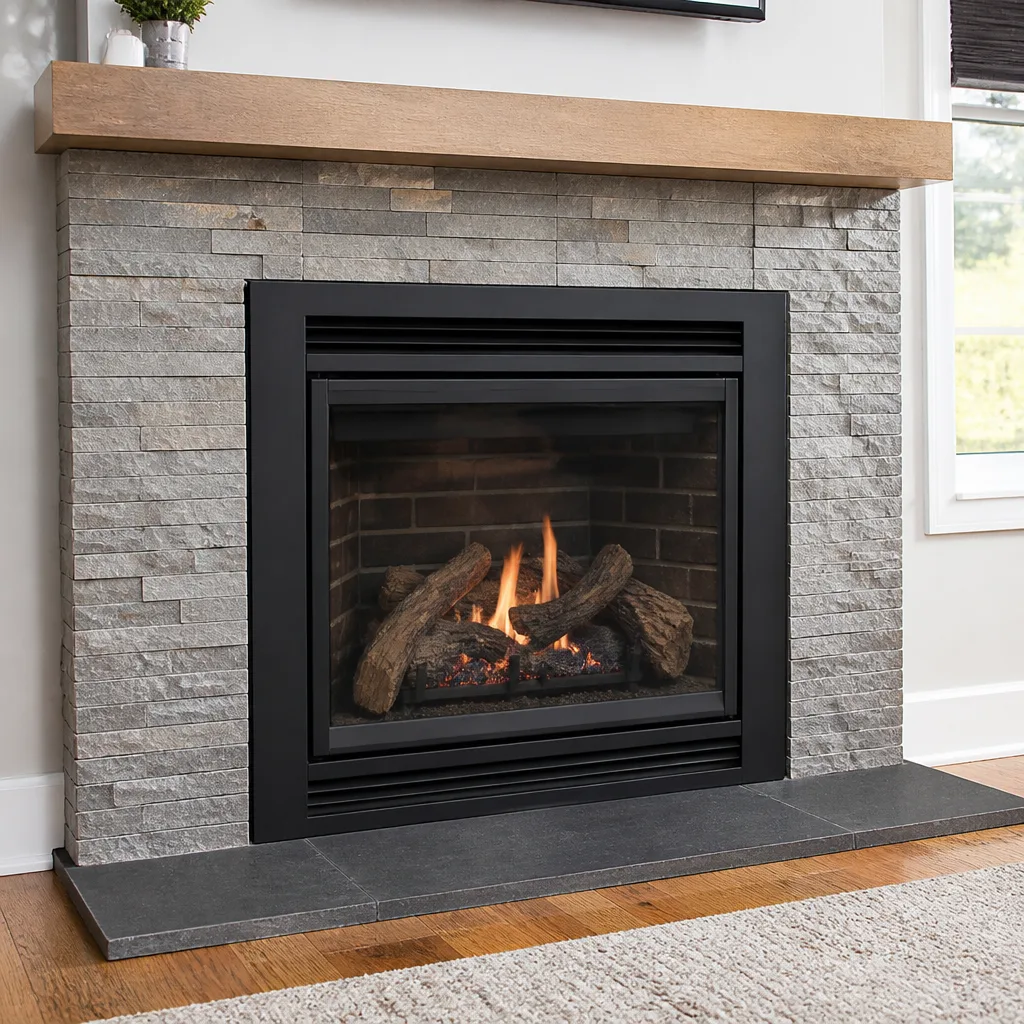 Gas fireplace service
Level 1 sweep and inspection to the NFPA 211 annual standard - flue, crown, cap, and flashing checked and photographed
Chimney sweep logs do not sweep chimneys. They loosen some creosote - which then falls where a brush and vacuum still have to collect it.
Chimney Sweep Maintenance Schedule: What to Do and When
Most homeowners treat a chimney sweep like an oil change: once a year, same interval, done. That schedule works for some chimneys and quietly fails others. A gas fireplace used a couple of evenings a week still needs its liner inspected on a fixed clock, and the assumption that clean-burning fuel means maintenance-free is one of the costliest gaps we run into in Port Richmond. Creosote timelines don’t apply to a gas appliance, but liner corrosion timelines do. This guide breaks the work down the way it actually varies: by fuel type, by how often you burn, and by component age. You’ll get a component-by-component timeline for wood, gas, and oil systems, a look at how the Port Richmond freeze-thaw cycle between November and March stresses the crown and mortar joints, the math on staying on schedule, and a simple way to log service so you have records when it matters.
Quick Answer
A chimney should be swept annually if you burn wood regularly, with a Level 2 camera inspection of the liner every two to three years depending on fuel type. The cap, spark arrestor, and damper should be checked once a year. The crown and exterior mortar joints should be inspected every two years, and a post-winter inspection is worth scheduling in Port Richmond to catch freeze-thaw damage before it compounds. Gas and oil systems still need annual inspection even though they produce little or no creosote.
Styles & brands we work with
- Sweep & inspection
- Caps & crowns
- Flue relining
- Masonry repair
- Gas fireplace service
Table of Contents
- Why a Standard Annual Sweep Isn’t the Whole Schedule
- Wood-Burning Systems: The Full Annual and Multi-Year Timeline
- Gas and Oil Systems: Different Fuel, Different Clock
- Component-by-Component Intervals: Crown, Cap, Liner, Damper
- The Port Richmond Freeze-Thaw Cycle and Your Chimney
- The Cost Math: Scheduled Sweeps vs. Deferred Repairs
- How to Log Chimney Service for Insurance and Resale
- Your Year at a Glance: A Numbered Maintenance Calendar
Why a Standard Annual Sweep Isn’t the Whole Schedule
The annual sweep is the floor. It’s the one task almost every chimney authority agrees on, and it’s the one most homeowners actually remember. But sweeping removes what’s built up inside the flue. It doesn’t tell you whether the crown has a hairline crack, whether a liner seam is beginning to fail, or whether the damper still closes tight. Those are separate components on separate clocks, and a schedule that only tracks the sweep misses every one of them.
We think about a chimney as a stack with distinct zones: the firebox and damper at the bottom, the flue and liner in the middle, the cap and spark arrestor at the top, and the crown and exterior masonry wrapping the whole thing. Each zone ages at a different rate depending on fuel, heat exposure, and weather. Wood-burning systems build creosote in the flue, so the liner and flue get the most attention. Gas systems run cooler and cleaner inside but can deposit corrosive condensate that attacks the liner from within, which is why a camera inspection matters even when there’s no soot to speak of.
Port Richmond’s older housing stock adds another variable. Homes here span a wide range of construction eras, and flue configurations vary from home to home, sometimes from block to block. A chimney that was built for a wood fire and later converted to gas may have a liner sized for the original fuel. Our technicians have up to 12 years of experience reading those configurations, and we handle the full chimney system – from the firebox to the crown – so a single visit can map every component and flag what’s on a near-term clock versus what can safely wait. That mapping is the foundation of any real maintenance schedule. Without it, you’re sweeping blind.
Wood-Burning Systems: The Full Annual and Multi-Year Timeline
If you burn wood regularly in Port Richmond, the annual schedule is non-negotiable, and the intervals around it are set by how much you burn and how well the fire is run. Here’s the timeline we recommend and the reasoning behind each step.
- Annual sweep (every year you burn). A qualified sweep removes creosote and soot from the flue and inspects what’s visible. Creosote builds in stages, and the later stages are harder to remove and more combustible. Annual removal keeps you ahead of that.
- Level 2 camera inspection of the liner (every 2-3 years). A camera run down the flue reveals cracks, gaps in joints, and corrosion that a visual check from the firebox can miss. How often you need one depends on burn volume and fuel quality. Heavy burners should lean toward the two-year end.
- Cap and spark arrestor check (annual). Debris, bird nests, and storm damage collect at the top. A cap that’s loose or a spark arrestor that’s clogged changes how the whole system drafts.
- Damper function check (annual). A damper that doesn’t seat fully leaks heat up the flue when the fireplace is cold and lets smoke back into the room when it’s not.
- Crown and mortar joint inspection (every 2 years, plus after any harsh winter). See the freeze-thaw section below for why the post-winter check matters in Port Richmond.
One nuance most one-page schedules skip: burn frequency changes the interval, not just the amount of work. A homeowner who lights a fire most nights from November through March is on a tighter sweep cadence than someone who burns a dozen fires a season. And burn quality matters too. Wet wood and restricted air supply produce more creosote than dry, hot fires. If you’re burning a lot and unsure how much creosote is accumulating, a mid-season visual check is cheap insurance.
Gas and Oil Systems: Different Fuel, Different Clock
This is the section most homeowners never read, and it’s the one that saves them the most. Gas fireplaces and inserts don’t produce creosote the way wood does, so many people assume there’s nothing to maintain. The flue still carries combustion byproducts, and those byproducts can be acidic. That acid attacks the liner over time, from the inside, where you can’t see it. The cleaning interval stretches out; the inspection interval does not.
For a gas system, we recommend:
- Annual inspection of the appliance, vent, and termination. Even a gas fireplace used a couple of times a week earns a yearly look.
- Liner inspection on a 2-year clock. The precise interval depends on the appliance and venting type, but two years is the ceiling we’d recommend for any operating gas system. Skipping it is where corrosion goes unnoticed.
- Cap, termination, and damper check annually. Gas terminations get blocked by debris and pest activity just like wood flues.
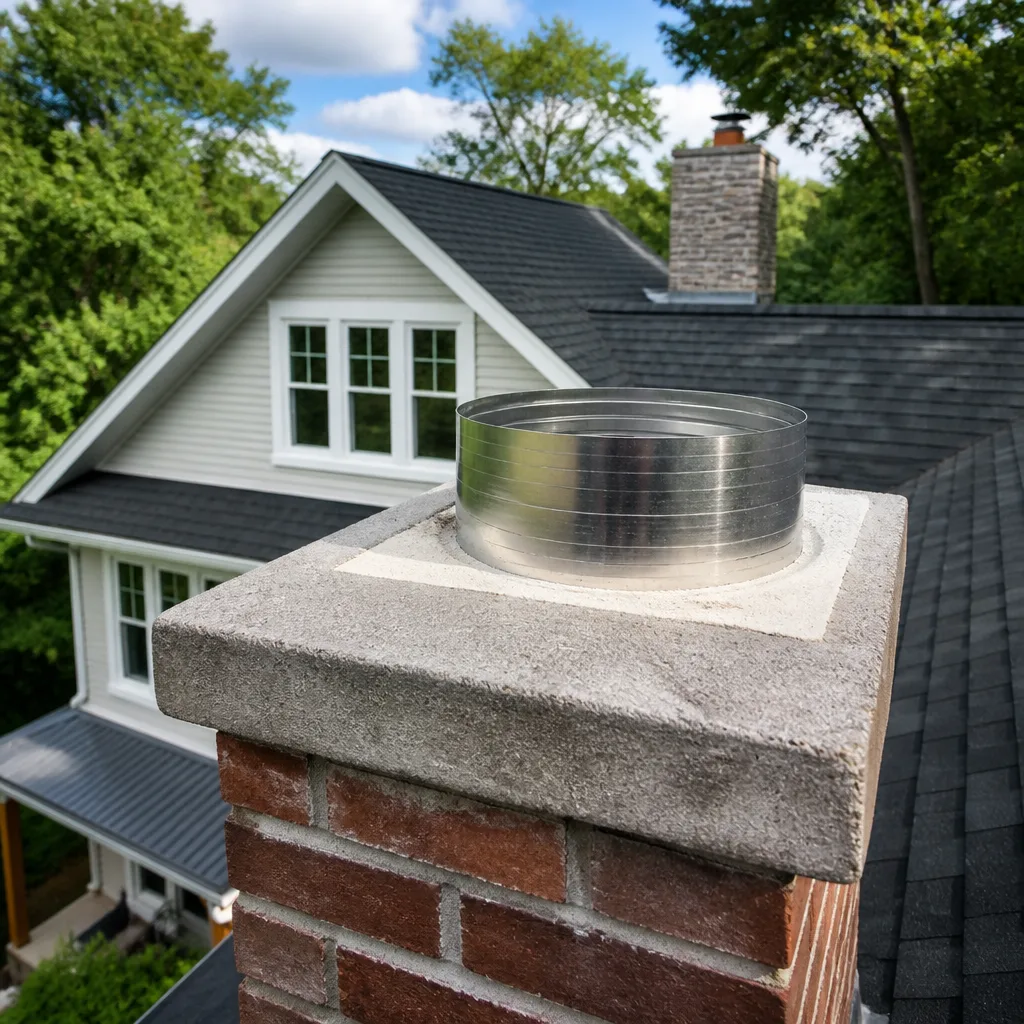
Oil systems sit in a different category again. Oil combustion produces soot and sulfur byproducts, and the flue on an oil appliance can corrode from the inside when flue gases cool and condense. Annual cleaning and inspection is the minimum for an active oil system, and the liner material matters. An older unlined or clay-lined flue serving an oil appliance deserves close scrutiny, because condensate damage to clay is slow and invisible until it’s structural. If a camera inspection turns up a deteriorated liner, this is where a restoration option like HeatShield can extend the life of the existing flue rather than trigger a full tear-out, and where a properly sized flexible liner can solve a configuration that rigid liners can’t reach. We keep DuraFlex flexible liner systems in the toolkit for exactly those cases.
Component-by-Component Intervals: Crown, Cap, Liner, Damper
This is the part a single annual sweep schedule leaves out. Here are the intervals we recommend for each major component, in one place, so you can track them separately.
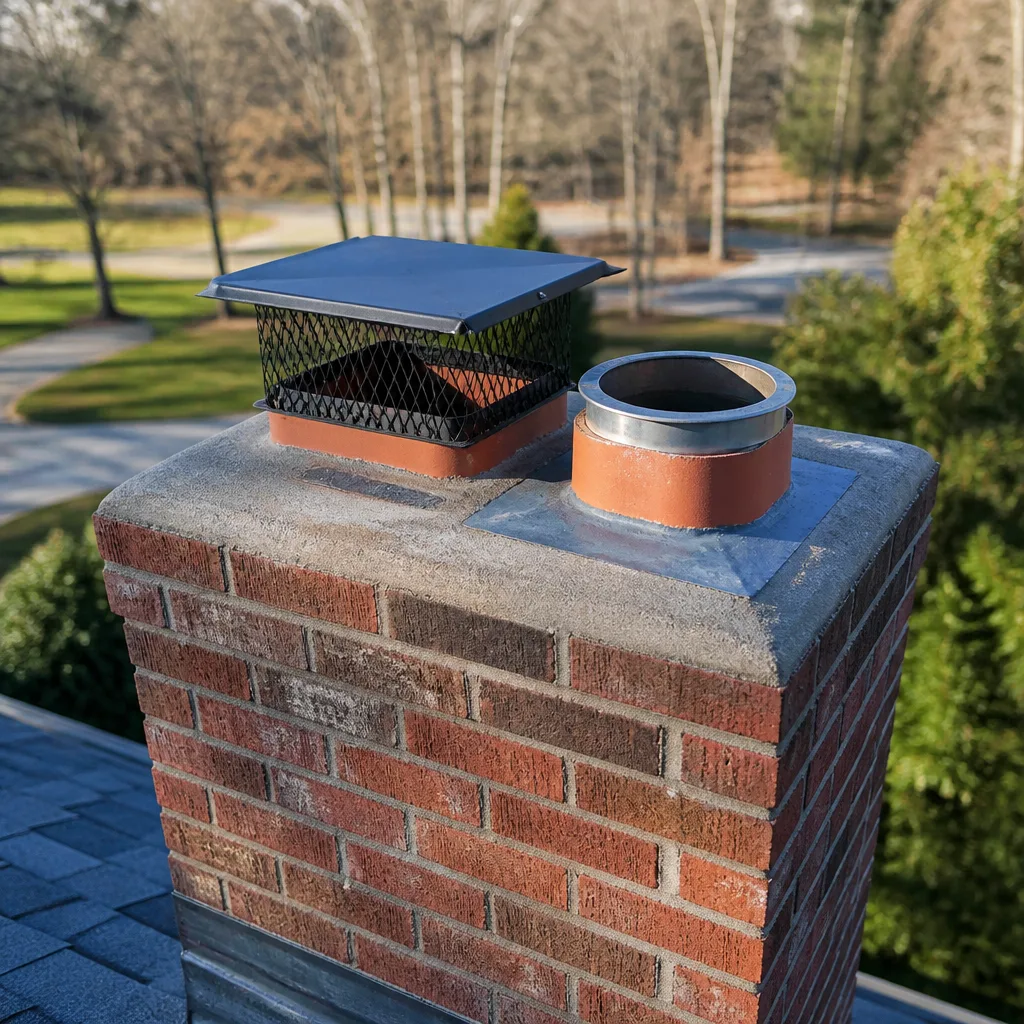
- Crown: inspect every 2 years. The crown is the concrete or masonry cap at the very top of the chimney. It sheds water away from the masonry. Once it cracks, water gets in and the damage moves downward.
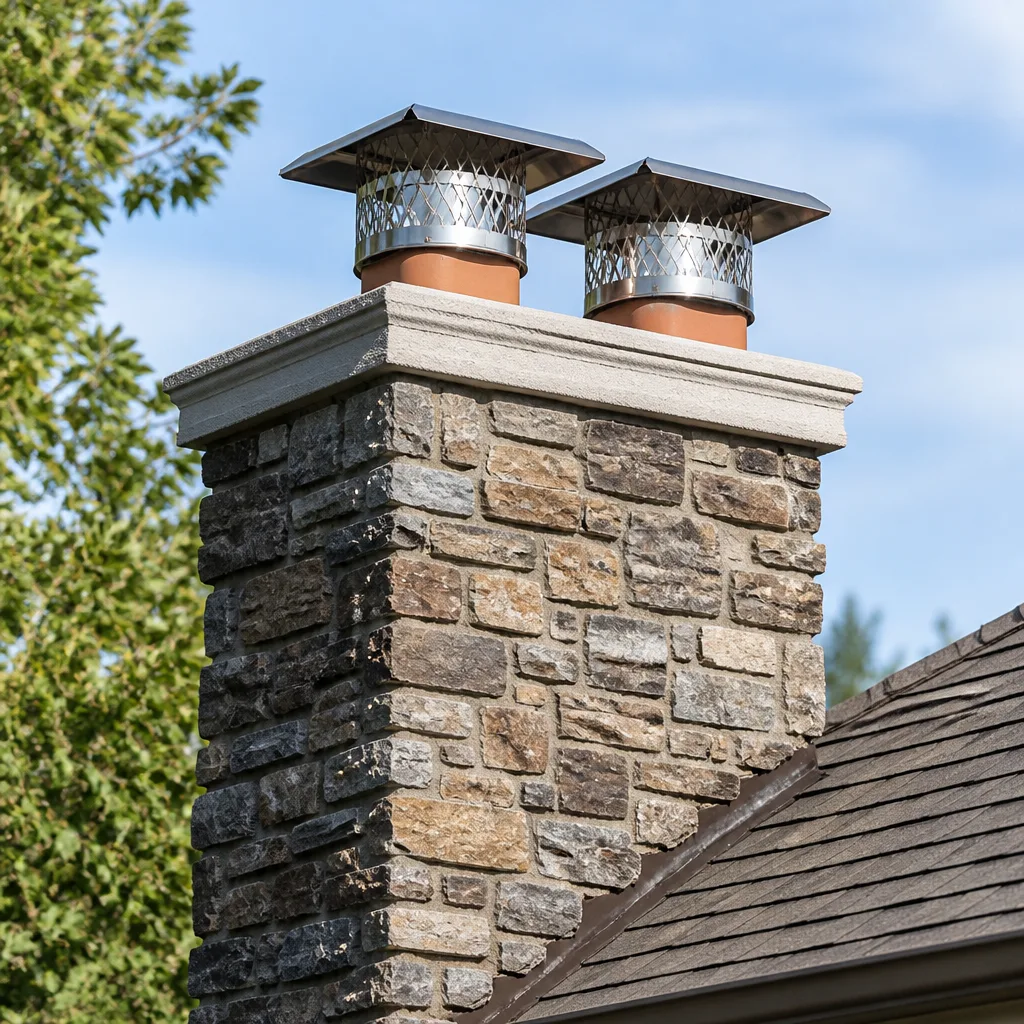
- Cap and spark arrestor: check annually. The cap keeps rain, animals, and debris out of the flue. The spark arrestor keeps embers in. Both can be damaged by storms or clogged by nesting. When a cap needs replacement, we fit purpose-engineered products from brands like Gelco, Olympia Chimney, and Famco rather than an improvised hardware-store cover.
- Liner: camera-inspect every 2-3 years depending on fuel. Wood systems can stretch to three years with light use; gas and oil systems should sit at the two-year end. The liner is the component that most affects whether the chimney is safe to use at all.
- Damper: check annually. A damper that doesn’t seal costs you heat and can let smoke into the room. It’s a quick check and often a quick fix.
- Flashing and exterior masonry: inspect every 2 years, and after any severe winter. See below for the Port Richmond-specific reason.
When a component fails, the fix should match the failure. Most chimney services stop at the sweep and hand you a list. We handle the sweep, the repair, and the rebuild, so the same team that flags a cracked crown can replace it. The same goes for chimney cap & crown work, liner installation, and full rebuilds. No handoffs, no waiting for another contractor to schedule.
The Port Richmond Freeze-Thaw Cycle and Your Chimney
Between November and March, Port Richmond’s temperatures swing above and below freezing repeatedly. That cycle is hard on masonry. Water gets into a mortar joint or a hairline crown crack during a thaw, then freezes overnight and expands. The expansion widens the crack a little. Repeat that cycle dozens of times over a winter and a hairline becomes a real gap. This is why the crown and mortar joints need a post-winter inspection even on the two-year schedule: a winter can do in one season what a mild climate would take several years to accomplish.
The post-winter check is your chance to catch damage before the spring and summer rains find it. A cracked crown that gets inspected in early spring and repaired is a small job. The same crack left through a wet season lets water into the masonry, and water in masonry is what drives the more expensive repairs: spalling brick, failed joints, and eventually a rebuild. We’ve seen this pattern enough times in Port Richmond to plan around it rather than react to it.
What a post-winter inspection covers:
- The crown for new cracks or crumbling at the edges.
- Mortar joints on the exterior stack for erosion and gaps.
- Flashing where the chimney meets the roof, since freeze-thaw works on that seam too.
- The cap, which can be displaced by ice or storm debris.
- The firebox and damper after a winter of use.
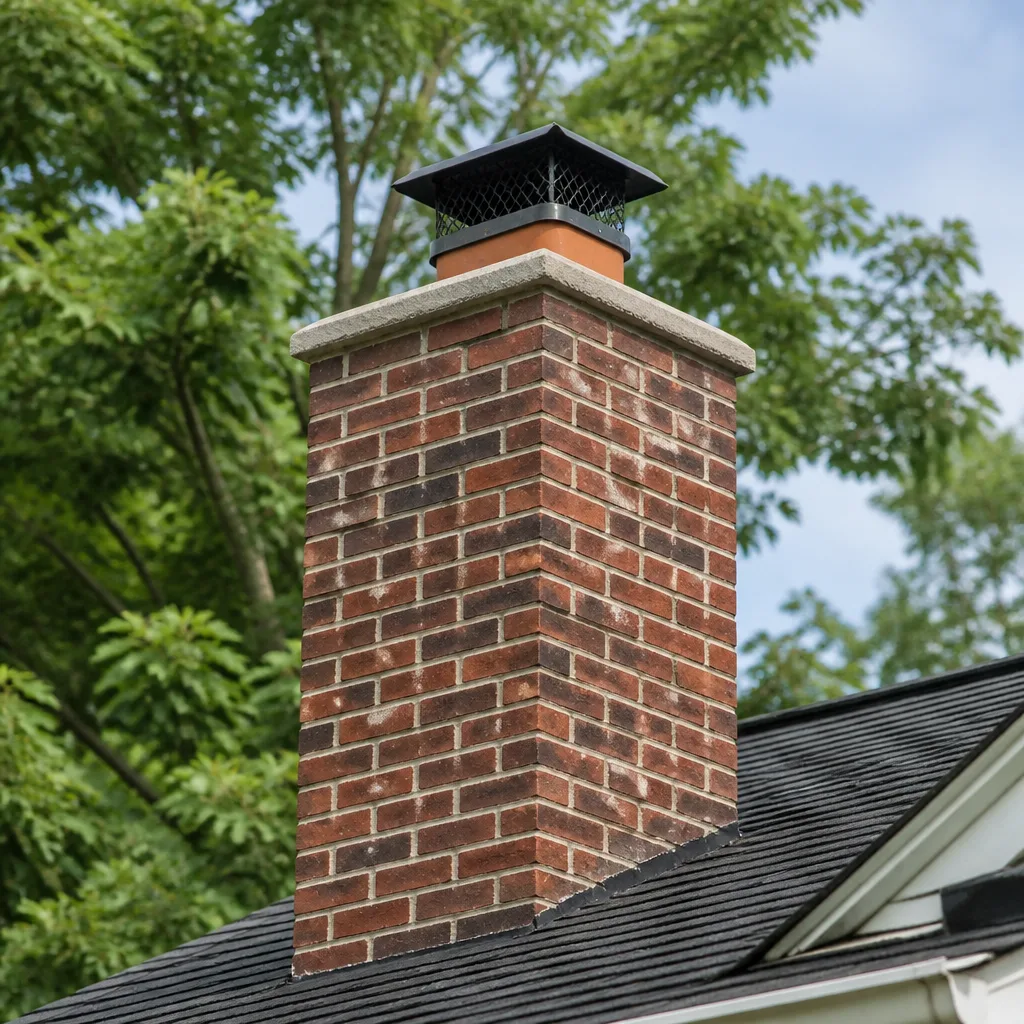
If your chimney has visible exterior mortar damage or spalling, that’s not a wait-and-see situation. A masonry repair now, sized to the damage, is a smaller job than a rebuild later. That’s the entire logic of a maintenance schedule: pay a little at the right time to avoid paying a lot at the wrong time.
The Cost Math: Scheduled Sweeps vs. Deferred Repairs
Pricing in any city varies by home, access, and what the inspection finds, so treat these figures as typical estimates rather than quotes. The written estimate sets the final price, and it’s free. Still, the comparison is worth seeing laid out. Here’s how the costs stack up in a Port Richmond market, put in relative terms.
- Annual sweep: the lowest-cost line item on the schedule. This is the routine maintenance that keeps the flue clear.
- Level 2 camera inspection: a modest additional cost when bundled with a sweep; it’s the diagnostic that tells you whether the liner is sound.
- Crown repair or re-crown: a mid-range repair when caught early, more when the damage has spread into the masonry.
- Liner replacement or restoration: a higher-cost item. HeatShield liner restoration can address structural deterioration without full rebuild costs, which is where it earns its keep.
- Full rebuild: the highest-cost outcome, and the one an on-schedule maintenance habit is designed to prevent.
The relative math is simple: the cheapest item on the list is the one that keeps you from needing the most expensive item on the list. That’s the argument for the schedule. It’s also why we don’t recommend work you can’t verify. When we find a problem, you get camera evidence and a photo report you can look at yourself. Nothing gets recommended just because a technician says so. And when work can safely wait, we say so, because the trust that earns a return visit is worth more than a repair you don’t need yet.
How to Log Chimney Service for Insurance and Resale
A chimney maintenance schedule only pays off if you can prove it. Two situations where records matter: a homeowner’s insurance claim after a chimney-related loss, and a real estate disclosure when you sell. An insurer asking what maintenance was done will want more than your memory. A buyer’s inspector looking at a maintenance history will ask the same. A simple log solves both.
Here’s what to record for every service visit:
- Date of service. Note it for every sweep, inspection, and repair.
- What was done. Sweep, camera inspection, cap replacement, crown repair, liner work. Be specific about the component.
- What was found. Note any issues flagged and whether they were addressed or scheduled.
- Photos and reports. Keep the camera inspection photo report with the log. This is the evidence that a claim or a buyer’s inspector will actually want to see.
- Receipts. Keep them in the same folder or file, digital or paper, so the whole history lives in one place.
A camera inspection with a photo report included on every visit makes this easy: the report is the log. When you have a documented, continuous maintenance history, an insurer and a buyer both read it as a well-kept chimney. That’s a quiet advantage at the two moments when it counts most.
Your Year at a Glance: A Numbered Maintenance Calendar
Here’s the whole schedule compressed into one calendar you can follow without re-reading the sections above. Treat each step as the trigger for the next.
- Late summer or early fall (before burning season): schedule the annual sweep and cap/damper check. If you burn wood regularly, add the Level 2 camera inspection if it’s due on the two-to-three-year clock.
- Early fall: schedule the biennial crown and mortar joint inspection if it’s due. This puts you ahead of the freeze-thaw season.
- Mid-winter (heavy wood burners): if you’re burning a lot, a mid-season visual check of what’s visible is cheap insurance against a creosote buildup you don’t know about.
- Early spring (after the freeze-thaw season): schedule the post-winter inspection of the crown, joints, flashing, and cap. This is Port Richmond’s most important calendar slot.
- Spring or summer: complete any repairs the spring inspection flagged while the scheduling is easy and before the wet season finds the damage.
- All year: add each visit, finding, and report to your log.
What you’re avoiding with all this is worth being precise about, without scare-selling. A chimney fire happens when creosote ignites in the flue, and a liner that has lost integrity can let combustion products escape into the home rather than up and out. Both are related to maintenance the schedule exists to catch. The schedule isn’t a guarantee of anything; it’s a routine that keeps the system in good repair and gives you a record of it. That’s enough reason on its own.
Common Mistakes to Avoid
- Assuming gas means maintenance-free. Gas systems don’t produce creosote, but they can attack the liner with acidic condensate. Skipping the two-year camera inspection on a gas system is the mistake we see most often in Port Richmond.
- Sweeping without inspecting. A sweep clears the flue; it doesn’t tell you whether the liner or crown is sound. Pair the sweep with a camera inspection on its own clock.
- Ignoring the crown until it fails. The crown is the cheapest thing to fix early and one of the more expensive things to fix late. Put it on a two-year clock and check it after every hard winter.
- Skipping the post-winter look. Port Richmond’s freeze-thaw cycle makes early spring the most valuable inspection of the year. A winter can do real damage to mortar joints, and the check is the cheapest way to catch it.
- Letting a cap go missing. Once a cap is gone, rain, animals, and debris get into the flue. A replacement cap is a small job; a damaged flue is not.
- Keeping no records. A chimney with a documented history reads as well-maintained to insurers and to a buyer’s inspector. A chimney with no records reads as unknown.
- Letting one inspection double as the schedule. One thorough inspection at the wrong time gets the year off to a false start. The schedule is a calendar, not a single visit.
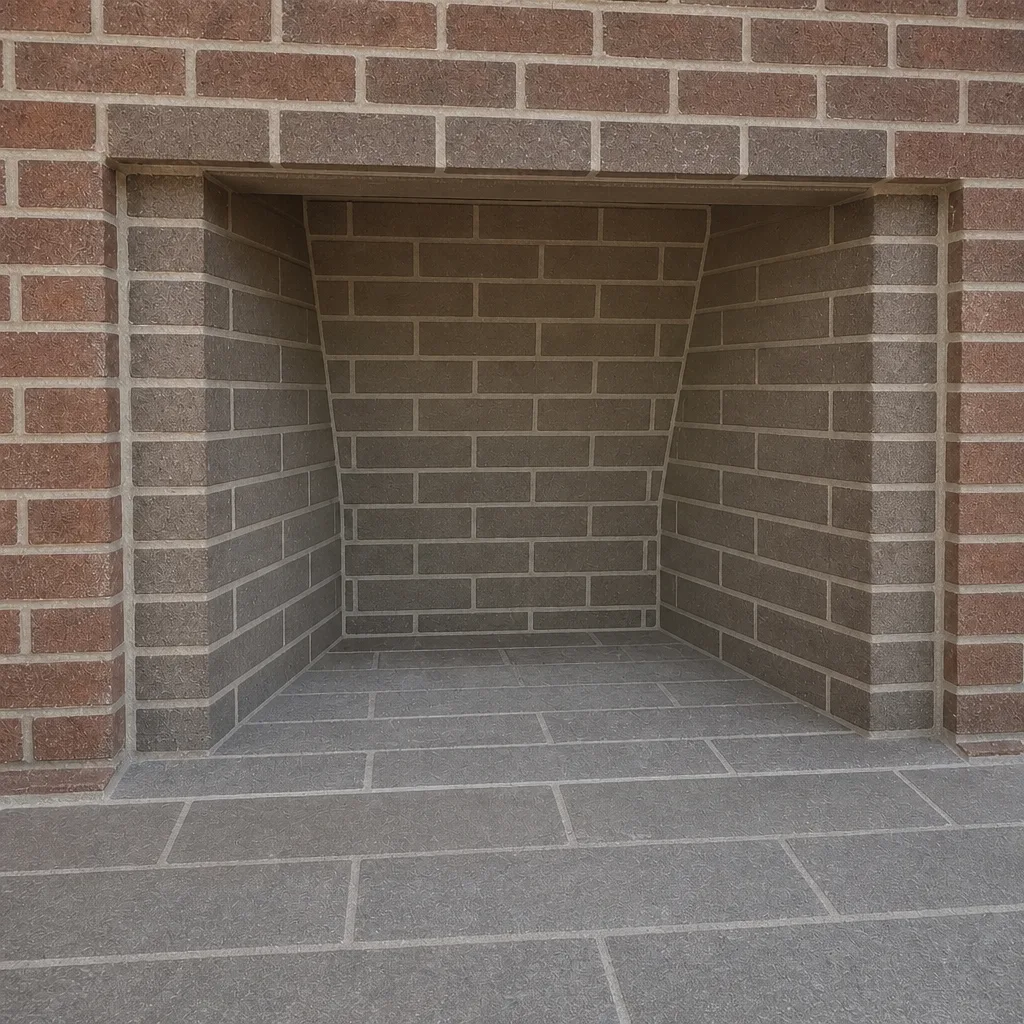
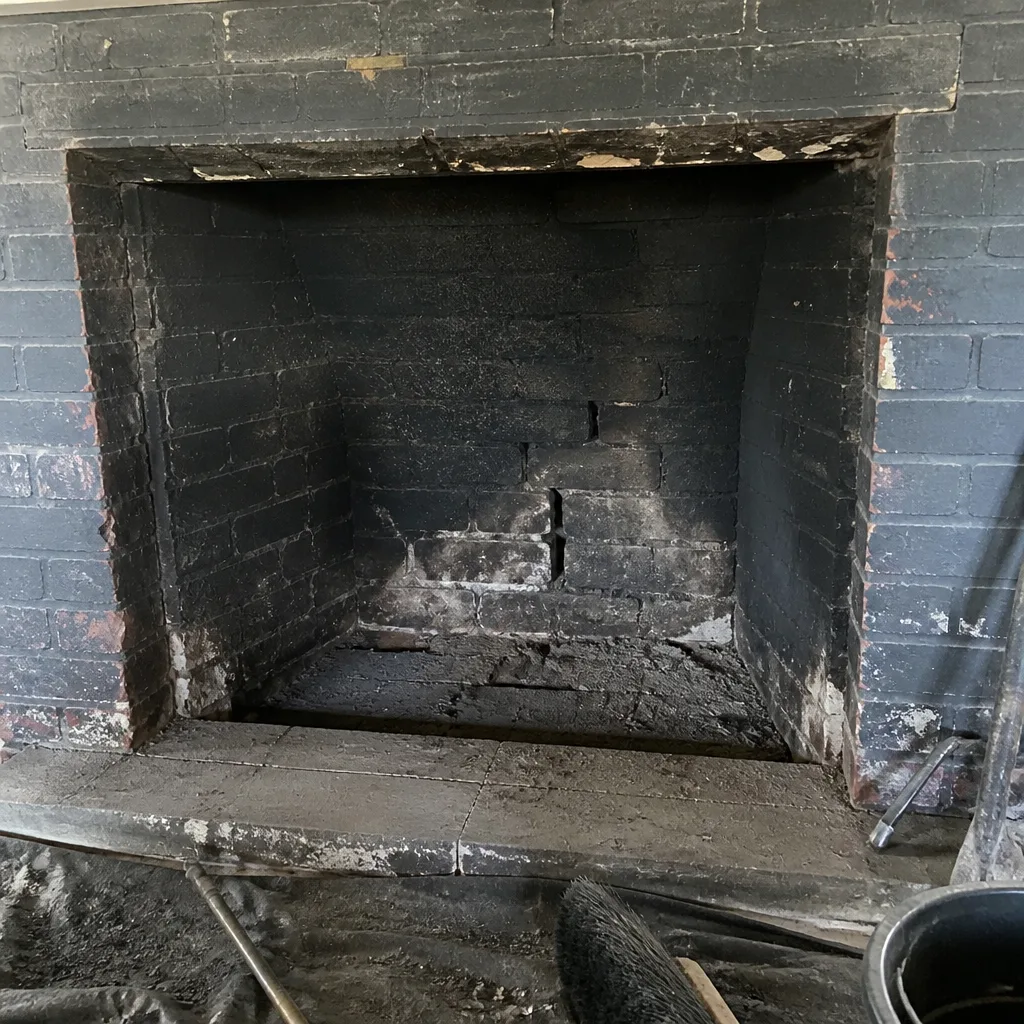
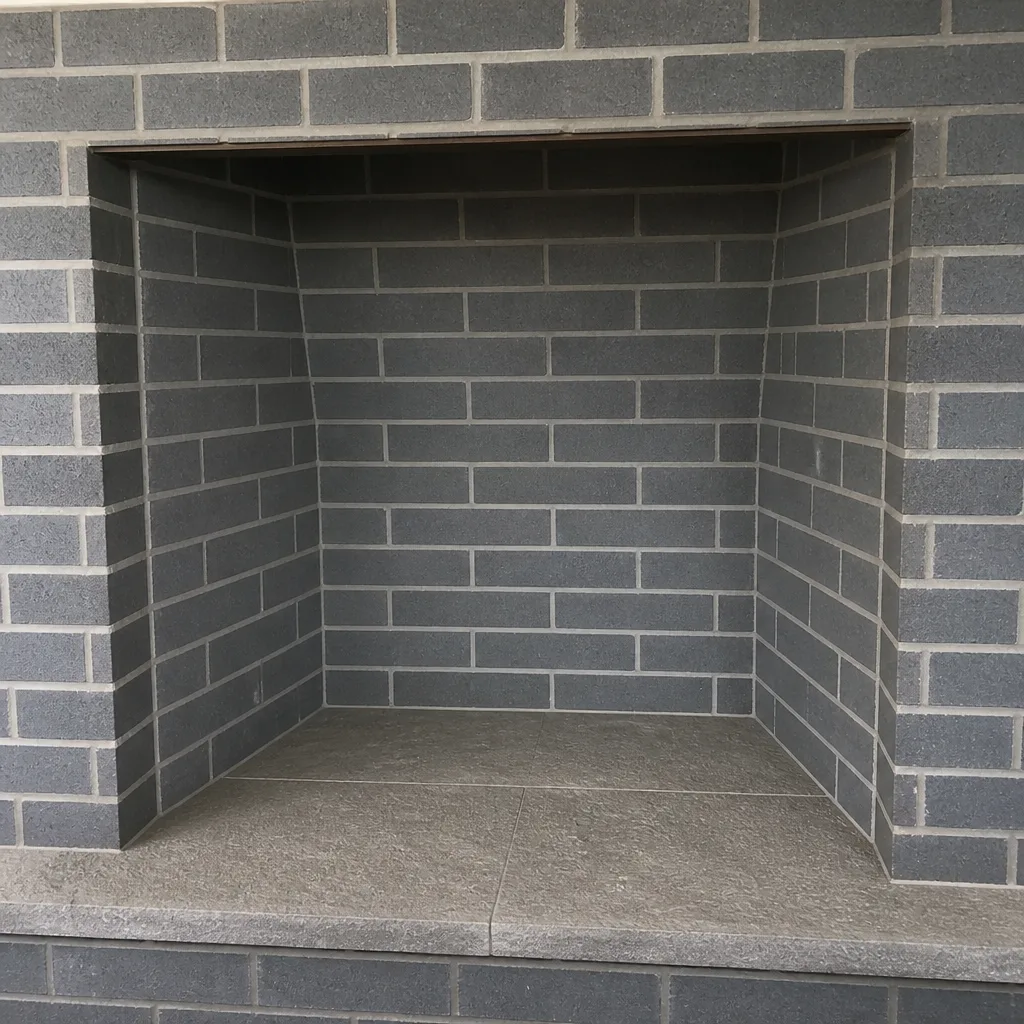
See the difference
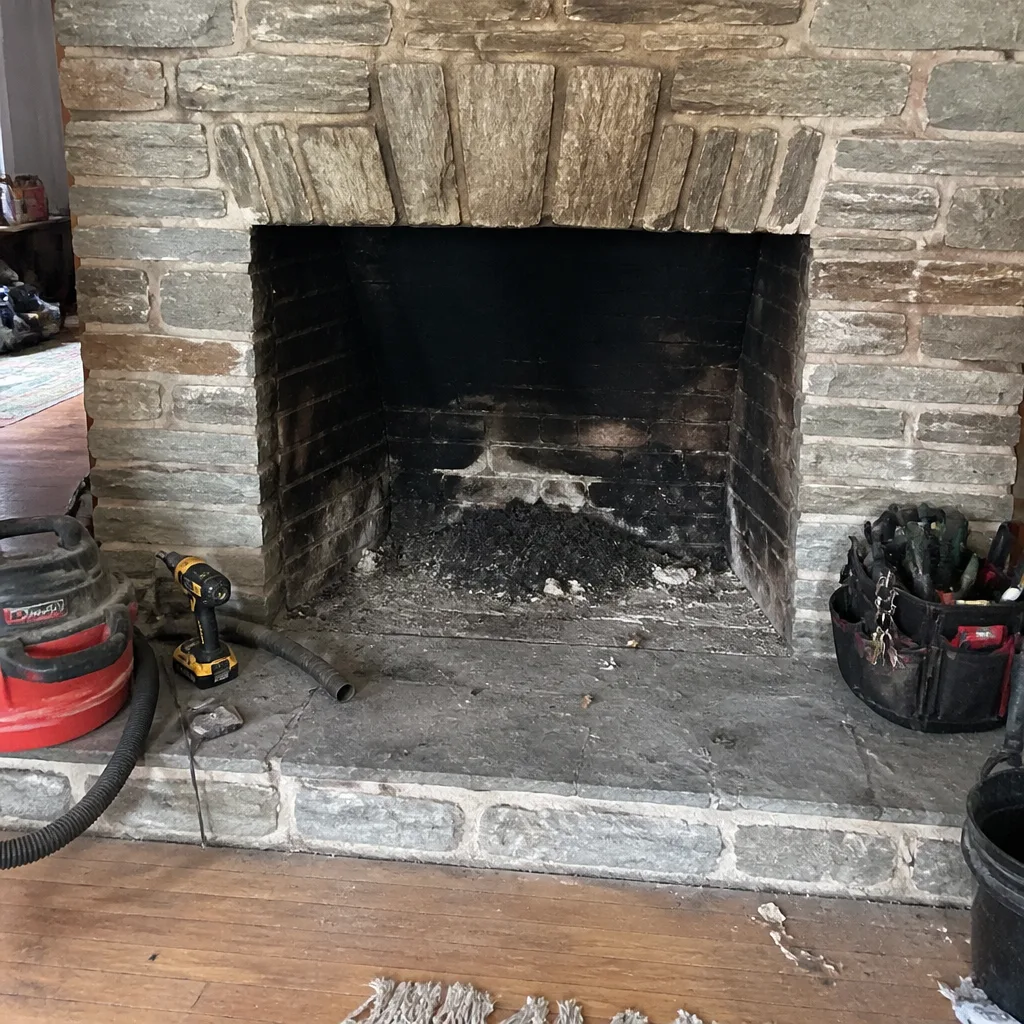 Before
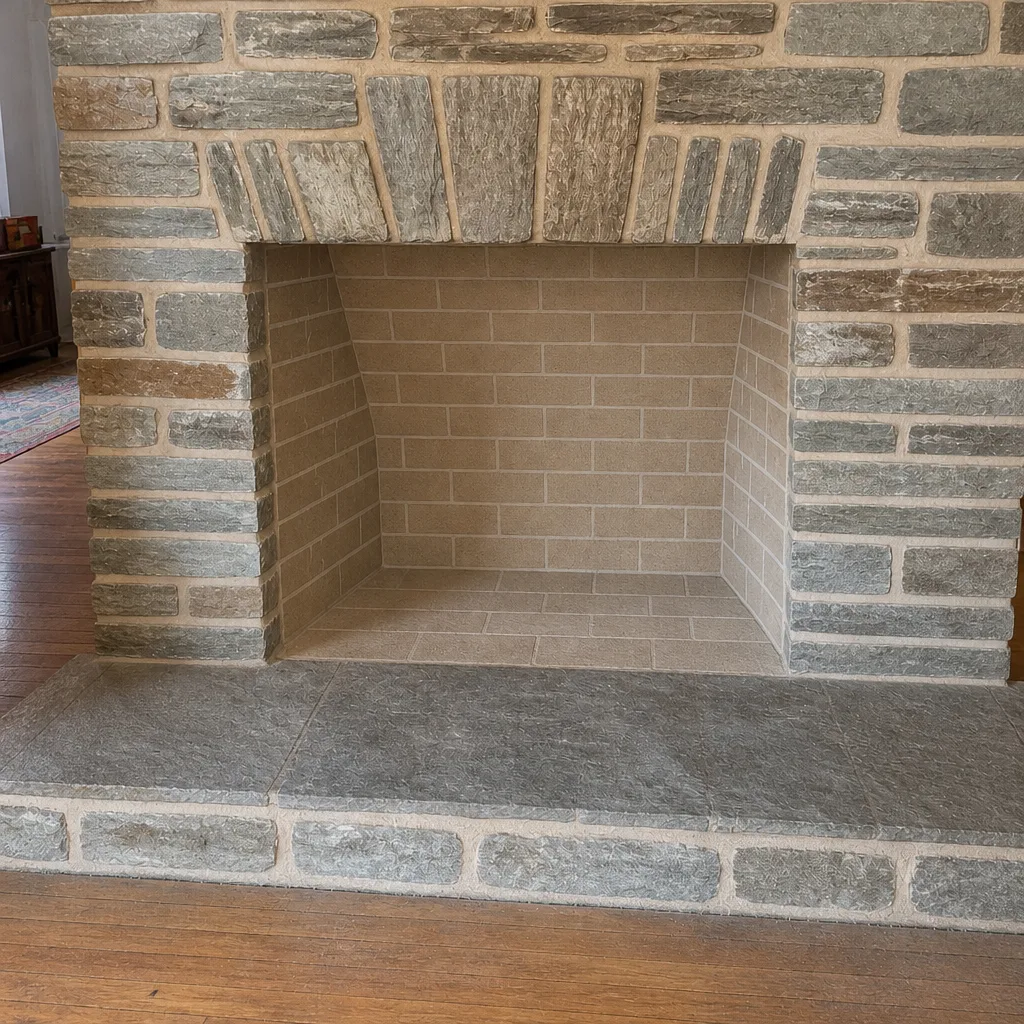 After
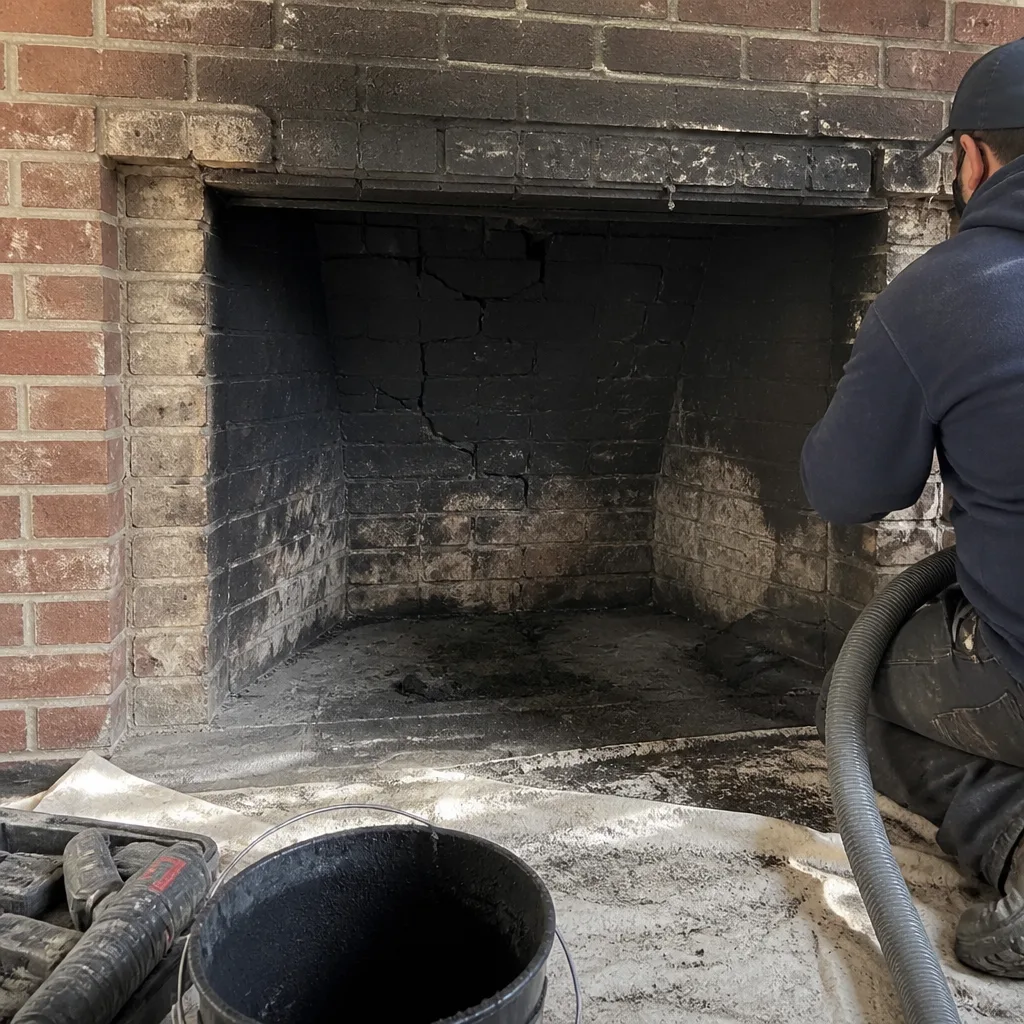 Before
 After
 Before
 After
When to Call a Professional
Some jobs are a check; others are a call. Call a professional with specific safety concerns: if you smell smoke or gas in the room, if a fire is difficult to start or drafts poorly, if you can see cracked masonry or a damaged crown, if a cap is loose or missing, if you haven’t had the chimney inspected since you moved in, or if you’re a heavy wood burner and it’s been more than a year. A damper that won’t seal and a liner that has lost integrity are both worth a professional look. Our technicians have up to 12 years of experience and can inspect every component from firebox to crown. Chimney Sweep Port Richmond offers free estimates in Port Richmond – call (833) 754-6815. We answer 24/7. Fast dispatch from 7am to 7pm.
Frequently Asked Questions
Once a year if you burn wood regularly, with a camera inspection of the liner every two to three years. Port Richmond’s freeze-thaw winters make the early-spring inspection the most important check of the year, because it catches crown and mortar damage before the wet season finds it. Call (833) 754-6815 for an exact quote – estimates are free.
Yes. A gas system doesn’t produce creosote, but its combustion byproducts can corrode the liner from the inside, so the liner inspection stays on a two-year clock even with light use. Skip it and the damage goes unnoticed until it’s a repair rather than an inspection. Call (833) 754-6815 for an exact quote.
Creosote builds up and becomes harder to remove, and the liner and crown go unexamined for another year. The risk is a chimney fire from accumulated creosote and a liner failure that goes unnoticed. Neither is a guarantee, but both are what the schedule exists to prevent. Call (833) 754-6815 to book the next sweep.
Every two years, plus a check after every harsh winter. In Port Richmond, the November-to-March freeze-thaw cycle accelerates crown and mortar joint deterioration, so the post-winter look is the one that catches damage early. Call (833) 754-6815 for an exact quote on a crown inspection.
You can do simple visual checks from the firebox, but a camera inspection of the liner and a close look at the crown and joints take training and the right equipment. The liner is where the damage you can’t see does the most harm. Call (833) 754-6815 to book a professional inspection.
Scheduled maintenance keeps you at the low end of the cost range; skipped maintenance moves you toward liner replacement or a rebuild, the highest-cost outcomes on the list. The written estimate sets the final price, and it’s free. Call (833) 754-6815 for your estimate.
The Bottom Line
The annual sweep is the floor of a real chimney maintenance schedule, not the whole schedule. Track each component on its own clock: cap and damper annually, crown and mortar joints every two years plus after every winter, liner every two to three years depending on fuel. Gas and oil systems need inspections even though they build little creosote, and Port Richmond’s freeze-thaw cycle makes the early-spring inspection the calendar slot that matters most. Keep records so the proof is there when it counts. And when inspection turns up a problem, you get camera evidence you can see before anything is recommended. Call (833) 754-6815 for a free estimate. We answer 24/7. Fast dispatch from 7am to 7pm, Sunday through Friday.
Written by the team at Chimney Sweep Port Richmond.